Herbert Barry III (1930–2025)

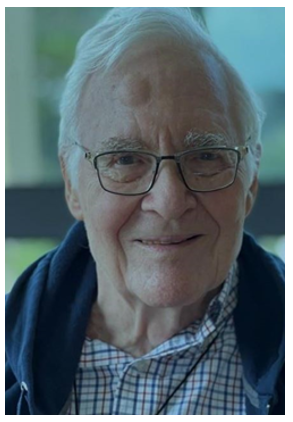
Dr. Barry was a prolific scholar, authoring or co-authoring more than 250 publications throughout his career. His extensive body of work includes research in psychopharmacology, cross-cultural studies, and psychohistory. Notably, he co-authored the two-volume book Actions of Alcohol in 1970 and Adolescence: An Anthropological Inquiry in 1991. At the age of 91, he published a collection of essays called A Professor's Perspective: Essays on the 45, Not 46, U.S. Presidents from Washington to Biden. Beyond his academic work, he also contributed a column to the Western Pennsylvania Mensa Society newsletter and had over two dozen letters published in the Pittsburgh Post-Gazette. He also worked to make his essays appeal to non-academic audiences writing on drinking in different cultures to the evolution of unisex names and even a study of the psychology of space travel.
Born in New York City and raised in Cambridge and Brookline, Massachusetts, Dr. Barry graduated from St. Paul's School in Concord, New Hampshire, in 1948. He received a B.A. in Social Relations from Harvard University in 1952 and often said that since his father, his grandfather, and three uncles all went there, he had little choice but to follow ‘the family tradition.’ He continued his studies at Yale University, earning an M.S. in 1953 and Ph.D. in Experimental Psychology in 1957.
Dr. Barry's early research focused on what he called ‘rat running,’ which described repeated experiments using laboratory rats to test learning, memory, and behavior in controlled environments. The results provided critical insights applicable to human psychology. For him, these experiments were more than rote tasks; they were stepping stones to understanding broader patterns of behavior and cognition. He joined the University of Pittsburgh in 1963 as a Research Associate Professor in the School of Pharmacy, where he became a full professor in 1970 and served until his retirement in 2001. In addition, he had an adjunct appointment in the Anthropology department and was a director from 1996-2011 of the Robert Schalkenbach Foundation, which advocates preferable sources of government revenues based on the writing of Henry George.
Dr. Barry's research on the behavioral effects of psychoactive drugs earned him national recognition, including a Research Scientist Development Award from the National Institute of Mental Health, the Distinguished Scientist Award from the Society for the Stimulus Properties of Drugs, and a Lifetime Achievement Award from the Psychohistory Forum in 2023.
Herb was a quintessential academic, with thick eyebrows, rumpled suits, and an intense gaze that showed he was really listening. He was known for having a stack of blank computer punch cards in his jacket to take notes. He was active, swimming daily, playing tennis and squash, and competed in chess tournaments. With awards around his sitting room, he would say he had ‘slightly better-than-average success.’ He even played chess by mail long before there was email.
Herbert Barry III's legacy is one of intellectual curiosity and real commitment. Even as Professor Emeritus, he continued writing, publishing, and chasing speaking opportunities at conferences. He remained as curious at 93 as he was as a boy when he first became captivated by the U.S. Presidents.
REFERENCE
Nick I. M. 2025. In Memoriam: Herbert Barry III (1930–2025). Names: A Journal of Onomastics 73 (4): 69–72. DOI 10.5195/names.2025.2852/.